The Leadership Challenge: Navigating Uncertainty
In times of crisis and uncertainty, leaders are expected to provide clarity and direction, yet chaos often exposes weaknesses in leadership that are easy to overlook in stable conditions. True leadership isn’t about waiting for stability – it’s about knowing how to lead yourself first so you can guide others effectively.
This is where personal stewardship comes in. Personal stewardship means taking ownership of your growth, mindset, and adaptability, especially when everything around you feels unpredictable. Self-awareness is the foundation of effective leadership. Without self-awareness, leaders risk stagnation and blind spots that can derail both their teams and organizations.
“Leadership in chaos is not about maintaining control – it’s about embracing uncertainty as an opportunity for growth.” – Moneesa Credle
Why Personal Stewardship Matters in Uncertain Times
When the pressure is on, leadership doesn’t pause – it becomes even more critical. But how do you lead effectively in the middle of uncertainty?
Great leaders understand that their ability to navigate external chaos is directly tied to their ability to manage internal stability. Personal stewardship ensures that leaders:
Stay adaptable instead of rigid in uncertain situations.
Remain self-aware of their strengths and areas for growth.
Seek feedback rather than isolating themselves.
Model resilience for their teams by managing their own mindset first.
Self-aware leaders recognize that growth isn’t automatic – it’s intentional. To lead well in uncertainty, you’ve got to be intentional about seeking and embracing habits that keep you learning, adjusting, and improving.
The Dangers of Stagnation and Pride in Leadership
In the work I do with Leaders and Teams, it’s been proven time and time again that leadership isn’t just about having a title – it’s about how you respond to the challenges that come along with your title. Two of the biggest threats to effective leadership in turbulent times are stagnation and pride.
Stagnation: Happens when leaders become complacent, relying on past successes rather than evolving with changing circumstances. A leader who stops learning is a leader who stops leading.
Pride: Prevents leaders from seeking feedback or admitting mistakes. When leaders resist change or believe they already have all the answers, they create blind spots that hinder progress.
“The leaders who thrive in turbulence are those who stay self-aware, seek feedback, and continuously evolve.” – Moneesa Credle
If you’re experiencing stagnation or resistance to feedback, ask yourself:
- When was the last time I actively sought feedback from my team?
- Am I holding onto old ways of thinking instead of adapting?
- Do I see change as a threat or an opportunity?
The best leaders check their ego at the door and remain open to new perspectives.
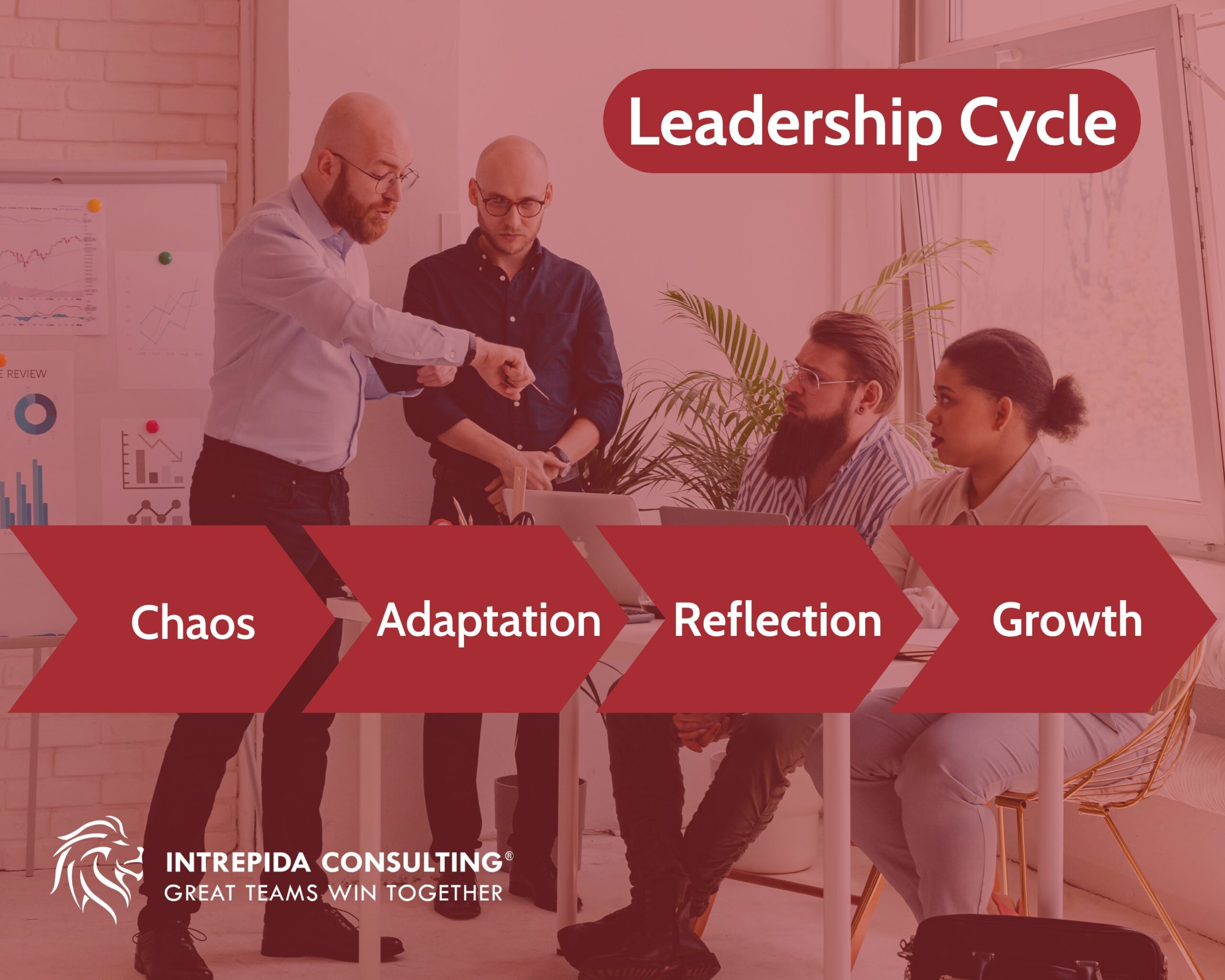
Turning Chaos Into a Leadership Advantage
The key to thriving in uncertainty isn’t about eliminating chaos – it’s about learning how to navigate it effectively. Personal stewardship helps leaders turn crisis into an opportunity for growth and innovation by:
Seeking ongoing feedback from peers, mentors, and employees.
Focusing on strengths while addressing areas of improvement.
Encouraging a growth mindset within their teams.
Staying adaptable rather than rigid in decision-making.
When leaders model self-reflection, adaptability, and resilience, they empower their teams to do the same.
Real-World Example: A Leader’s Response to Crisis
A client, who’s a senior executive at a global company, was facing intense financial constraints and pressure to innovate. Instead of reacting with stress and isolation, they:
- Took a step back to reflect on strengths and areas for improvement.
- Sought input from the team to generate creative solutions.
- Embraced a collaborative approach, fostering innovation despite challenges.
By practicing personal stewardship, this leader didn’t just survive the crisis – they emerged stronger, and so did their team.
“Pride and stagnation are silent leadership killers – stay open, stay adaptable, and turn challenges into stepping stones.” – Moneesa Credle
Interactive Exercise: Feedback Reflection for Growth
The best way to improve as a leader is to actively seek and apply feedback. Take a moment to reflect:
- Recall a recent piece of feedback you received.
- Did you embrace it as a growth opportunity or resist it?
- Rate your openness to feedback on a scale of 1 to 10.
- If it’s below 7, what’s holding you back?
- Identify one area where feedback could help you grow.
- What action can you take today to apply it?
By consistently reflecting on feedback and making small adjustments, you ensure that uncertainty fuels growth rather than fear.
Key Takeaway: Thriving in Uncertainty Starts With You
Personal stewardship is the foundation of strong leadership in uncertain times. Leaders who commit to self-awareness, adaptability, and feedback-driven growth will not only survive turbulence but use it as a catalyst for transformation.
Remember:
Stay self-aware.
Seek feedback.
Lead with adaptability.
When leaders take ownership of their growth, their teams follow.
Are You Ready to Lead Through Uncertainty?
At Intrepida Consulting, we help leaders develop the skills to navigate turbulence with confidence. If you’re ready to take your leadership to the next level, let’s talk.
Schedule a Discovery Call Today.